
Moving to Tampa: Temporary Housing Options Guide
Table of Contents
Understanding Temporary Housing Options in Tampa Types of Temporary Housing Available Why Flexibility Matters During Relocation
Types of Temporary Housing Available
Why Flexibility Matters During Relocation
Month-to-Month Furnished Rentals in Tampa What Move-In Ready Really Means Lease Flexibility and Early Departure Options
What Move-In Ready Really Means
Lease Flexibility and Early Departure Options
Corporate Housing Solutions for Tampa Relocations What Corporate Housing Includes Working With Insurance and Employer Programs
What Corporate Housing Includes
Working With Insurance and Employer Programs
Pet-Friendly Short-Term Rentals in Tampa Pet Policies and Included Amenities
Pet Policies and Included Amenities
Cost Breakdown and Budget Planning What Affects Temporary Housing Costs Utilities and Hidden Fees to Know About
What Affects Temporary Housing Costs
Utilities and Hidden Fees to Know About
Choosing the Right Temporary Housing for Your Situation Inspection Checklist for Temporary Units Red Flags and What to Avoid
Inspection Checklist for Temporary Units
Red Flags and What to Avoid
Making Your Temporary Stay Feel Like Home
Conclusion
Last Updated: August 20, 2026
Understanding Temporary Housing Options in Tampa
Moving to a new city is stressful without scrambling to find a place to live. Temporary housing gives you breathing room to settle in, explore neighborhoods, and make informed decisions about long-term housing. At Tanblu, we provide flexible solutions that work for various timelines and budgets.
Temporary housing isn't one-size-fits-all. Your needs depend on how long you're staying, whether you have pets, what amenities matter most, and how much flexibility you need if plans change. Understanding what's available helps you avoid overpaying or ending up in a space that doesn't fit your life.

Types of Temporary Housing Available
Furnished apartments are traditional rentals with furniture, dishes, bedding, and appliances already in place. Lease terms typically range from one to six months, with many landlords allowing early termination without heavy penalties.
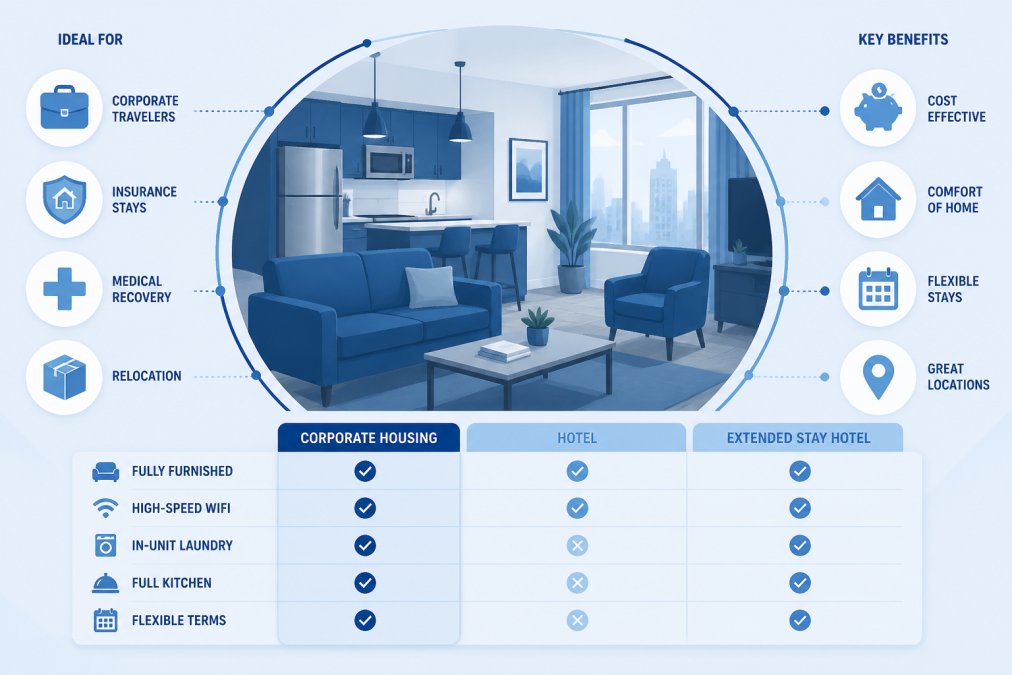
Corporate housing solutions are purpose-built for relocating professionals. These fully furnished suites often include utilities, internet, and housekeeping services. Many corporate housing providers work directly with insurance companies and employer relocation programs, simplifying reimbursement.
Extended-stay hotels occupy a middle ground between hotels and apartments. You get a furnished room with kitchenette, daily housekeeping, and front-desk support, though with less space than a full apartment.
Vacation rentals through platforms offer flexibility and lower nightly rates for longer stays, though quality and amenities vary significantly between properties.
Why Flexibility Matters During Relocation
Your initial timeline estimate is usually wrong. House closings get delayed, job start dates shift, or you find the perfect neighborhood but can't move in for another month. If you're locked into a 12-month lease, you're paying for housing you don't need.
Month-to-month leases and flexible early-departure options provide the breathing room relocation actually requires. The slight premium you might pay for flexibility often costs less than being stuck in an unsuitable lease.
Month-to-Month Furnished Rentals in Tampa
Month-to-month furnished rentals are the backbone of Tampa's temporary housing market. They give you genuine flexibility without long-term commitment. You can extend if needed or leave when permanent housing is ready.
What Move-In Ready Really Means
Move-in ready should mean you can walk in with just clothes and essentials. A genuinely move-in ready rental includes a full kitchen with cookware and utensils, bedding and pillows, towels, basic furniture, and typically washer and dryer access. You should be able to cook dinner the first night and sleep in clean sheets.
Some furnished apartments skimp on kitchen supplies or provide only bare minimums. Before committing, ask specifically about pots, pans, dish towels, and can openers. These details determine whether you're living comfortably or making repeated trips to stores.
Tanblu's furnished suites prioritize this level of detail. Each unit includes a fully equipped kitchen, quality bedding, and everyday items that make a space feel like home rather than a temporary crash pad.
Lease Flexibility and Early Departure Options
The real test of a temporary housing provider is what happens when plans change. Standard month-to-month rentals typically require 30 days' notice to vacate with no early-termination fees if you follow that protocol. Some landlords allow earlier departure if you forfeit your security deposit.
Before signing anything, confirm in writing what happens if you need to leave early and what notice period applies. Avoid "no early termination" clauses that lock you into paying rent after you've moved.
Corporate Housing Solutions for Tampa Relocations
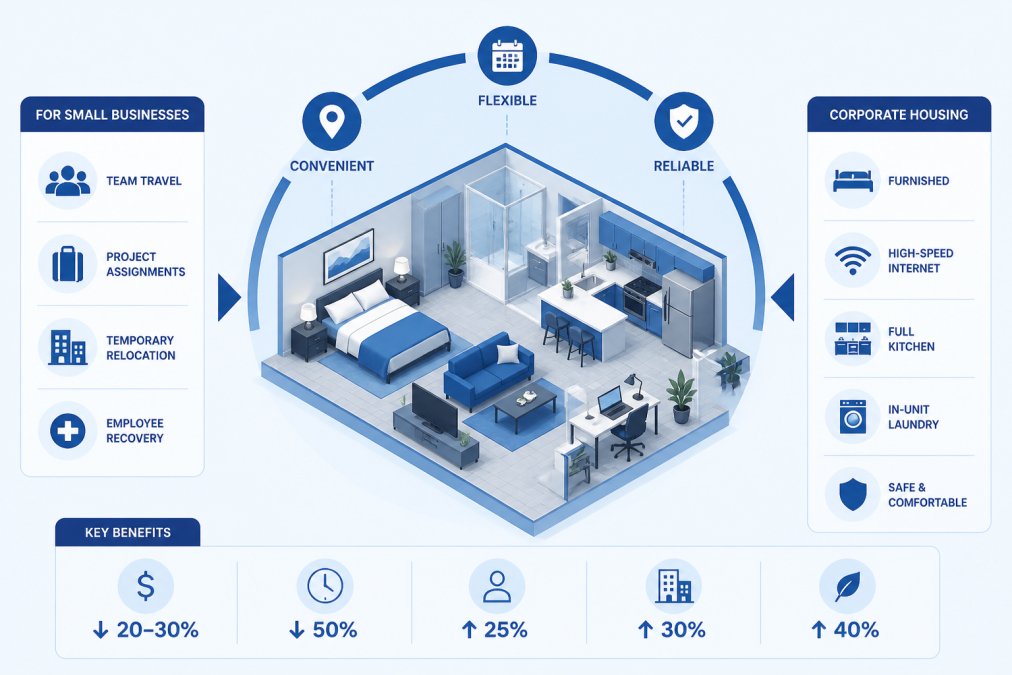
Corporate housing exists specifically to handle employee relocations, insurance-covered temporary stays, and situations where standard apartment rentals don't fit the need.
What Corporate Housing Includes
Corporate housing typically includes far more than furnished apartments. Beyond furniture and kitchen equipment, utilities are included in rent with no separate bills for electric, water, or internet. Many providers include basic housekeeping services, which matters when you're working full-time and managing relocation simultaneously.
Amenities often extend to gym access, co-working spaces, or community events designed to help relocating professionals stay connected and reduce isolation during transition.
Working With Insurance and Employer Programs
Corporate housing providers who work directly with insurers understand reimbursement requirements and handle documentation automatically. If your employer covers relocation housing, corporate housing vendors typically have established relationships with HR departments and simplified approval processes.
Tanblu specializes in these partnerships. We work with insurance companies and corporate relocation programs to ensure the housing you need is also the housing that gets covered, eliminating gaps where you pay out of pocket hoping for reimbursement later.
Pet-Friendly Short-Term Rentals in Tampa
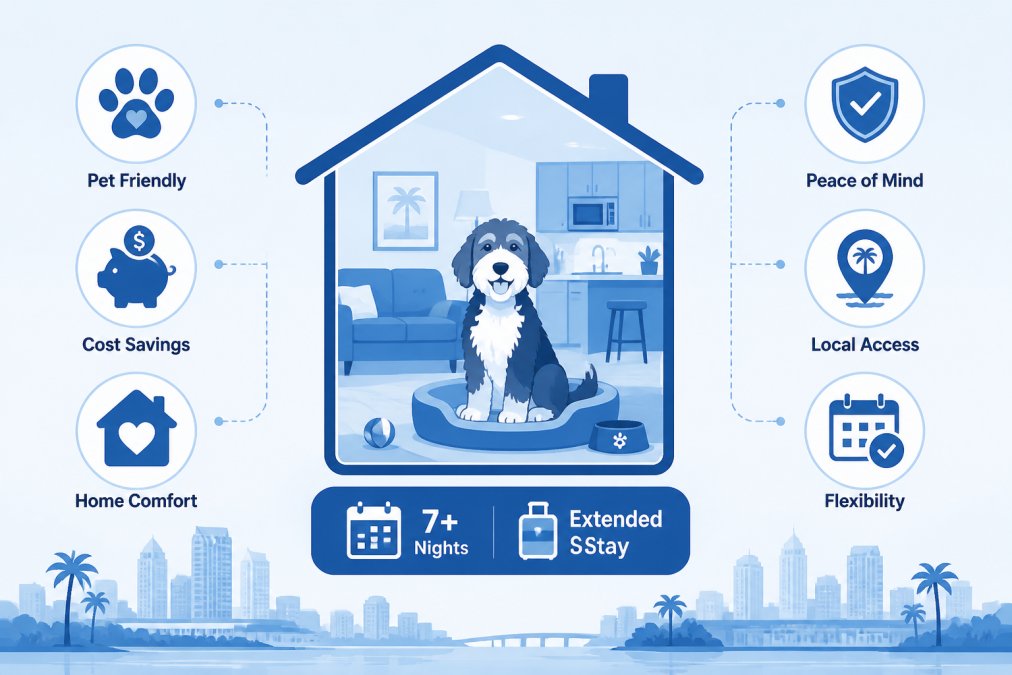
If you have pets, temporary housing becomes significantly more complicated. Most traditional apartments charge pet deposits, monthly pet fees, or both. Some don't allow pets at all.
Pet Policies and Included Amenities
Pet-friendly short-term rentals in Tampa vary in what they allow. Some limit you to one pet under 25 pounds; others charge $50-100 per month per pet. The best pet-friendly housing includes pets in the advertised price with no additional monthly fees.
Amenities matter differently with pets. Ground-floor units with direct outdoor access are essential so you're not hauling your dog up stairs multiple times daily. Nearby parks or pet-friendly areas matter significantly.
Tanblu's pet-friendly suites are designed around actual pet owner needs. Pets are included in standard pricing with no surprise monthly fees.
::tip Before booking any pet-friendly rental, ask whether pet fees are included in the advertised price or added monthly. Get the answer in writing to avoid disputes. :::
Cost Breakdown and Budget Planning
Temporary housing costs in Tampa depend on multiple factors beyond base rent.
What Affects Temporary Housing Costs
Location matters enormously. Housing near downtown Tampa or popular neighborhoods costs more than outlying areas. Season affects availability and pricing; summer is peak relocation season with higher costs, while winter sees slightly lower demand and better rates.
Duration of stay influences pricing. A three-month lease typically costs less per month than a one-month lease. Landlords prefer longer commitments because it reduces turnover costs.
Amenities and included services affect price significantly. Furnished apartments with utilities included cost more upfront but less overall because you're not paying separate electric, water, and internet bills.

Utilities and Hidden Fees to Know About
A furnished apartment advertised at $1,500 per month might actually cost $1,750 once you add electric, water, internet, and parking. Always ask what's included in the advertised price and what costs extra.
Internet often gets forgotten. If not included, expect $50-80 per month. Air conditioning bills can spike significantly in Tampa's summer if utilities aren't included.
Pet fees are another common surprise. Even "pet-friendly" rentals sometimes charge $25-50 per pet per month. Security deposits for short-term rentals are typically one month's rent.
Watch Out Some temporary housing providers charge "processing fees" or "administrative fees" not obvious upfront. These can add $200-500 to initial costs. Always ask for a complete breakdown of all fees before signing.
Choosing the Right Temporary Housing for Your Situation
Not all options are right for all situations. A corporate housing solution might be overkill for a three-week stay. A vacation rental might be too inconsistent if you need reliable utilities and consistent service.
Your choice depends on how long you're staying, your budget, whether you have pets, whether you need utilities included, and how much flexibility you need if plans change.
Inspection Checklist for Temporary Units
Before committing, do a thorough inspection. Visit the actual unit in person if possible, or request a video walkthrough if relocating from out of state.
Check kitchen functionality, appliance operation, water pressure and hot water, climate control adequacy, internet speed (at least 50 Mbps if working remotely), cleanliness, noise levels, parking accessibility, and natural light. A broken appliance in temporary housing is a real problem because you can't wait weeks for repairs.
Red Flags and What to Avoid
If a landlord is reluctant to provide a lease in writing, that's a major red flag. Be wary of landlords wanting payment entirely in cash with no receipt, which often indicates unreported income and potential legal complications.
If the unit is noticeably dirty or smells bad, don't assume it's just been lived in. Strong mold, mildew, or pet odors suggest maintenance issues. Avoid situations where the landlord is living in the same unit or has keys to your private spaces. You need genuine privacy during temporary stays.
If the landlord can't clearly explain what's included in rent and what costs extra, move on. Vague terms lead to disputes.
Making Your Temporary Stay Feel Like Home
The difference between surviving and enjoying a temporary stay comes down to intentionality. Unpack properly rather than living out of boxes. Hanging clothes and organizing belongings makes a psychological difference.
Personalize the space with items that matter to you, a favorite photo, a plant, a good coffee maker. Establish routines quickly by finding a coffee shop, grocery store, and parks you'll use. These routines create stability and help Tampa feel less foreign.
If temporary housing includes community spaces or events, use them. This is especially valuable if you're relocating alone.
Key Takeaway The best temporary housing isn't the cheapest or most luxurious, it's the one that fits your actual situation. A $1,800 corporate housing suite with utilities included might cost less overall than a $1,400 furnished apartment where you're paying separate bills and dealing with inconsistent service.
Finding the right temporary housing in Tampa sets the tone for your entire relocation. You deserve housing that's actually move-in ready, flexible enough to adapt if your timeline changes, and comfortable enough that you're not counting down days until you can leave. Tanblu specializes in exactly this, fully furnished suites with included utilities, month-to-month flexibility, and pet-friendly options that don't charge surprise monthly fees. When you're managing a relocation, having housing that removes friction rather than creating it makes everything else easier. Browse and Book Now to explore available temporary housing options in Tampa that match your timeline and needs.
Frequently Asked Questions
What is the difference between temporary housing and a standard apartment lease?
Temporary housing offers lease flexibility, typically ranging from a few weeks to several months, without long-term commitments. Standard leases require 12-month agreements and usually require unfurnished units. Temporary housing comes fully furnished with utilities and amenities included, making it ideal for relocations, medical stays, or corporate assignments. You avoid setup costs and can leave early without penalties when circumstances change.
Can I actually get a month-to-month furnished rental in Tampa without early departure penalties?
Yes, many providers offer genuine month-to-month leases with flexibility to leave early. The key is confirming the terms before signing, some advertise flexibility but charge penalties for early exit. Look for providers that explicitly state no early termination fees and allow you to end your lease with standard notice (typically 30 days). Read the rental agreement carefully to ensure lease flexibility is truly built in, not just marketed.
Are pet-friendly short-term rentals in Tampa actually pet-friendly, or are there hidden fees?
Pet policies vary significantly across temporary housing providers. Some include pets at no additional cost, while others charge monthly pet fees or deposits. Before booking, ask specifically whether pet fees are included in the advertised price or added separately. Confirm any breed or size restrictions, and get the pet policy in writing. Reputable providers are transparent about pet costs upfront and don't surprise you with extra charges at move-in.
How do I know a temporary housing provider can actually deliver what they promise?
Request recent photos or video tours of the specific unit you'll occupy, not just similar units. Ask about their cancellation and guarantee policies, what happens if the unit isn't available or doesn't match the listing. Check reviews and ask for references from recent guests. Confirm the move-in-ready status in writing, specifying which items (bedding, kitchenware, linens) are included. Reputable providers offer clear guarantees and are willing to document commitments in your rental agreement.
Browse and Book Now!
This article was written using GrandRanker
Comments