
Does Insurance Cover Temporary Housing? A Step-by-Step Guide
Table of Contents
Does Insurance Cover Temporary Housing? Homeowners Insurance and Loss of Use Coverage Renters Insurance Temporary Housing Benefits
Homeowners Insurance and Loss of Use Coverage
Renters Insurance Temporary Housing Benefits
What Does Additional Living Expenses (ALE) Coverage Include? Covered Housing Costs Under ALE What ALE Does Not Cover
Covered Housing Costs Under ALE
What ALE Does Not Cover
When Does Insurance Pay for Temporary Housing? Covered Perils That Trigger Housing Benefits Uninhabitable Residence Requirements
Covered Perils That Trigger Housing Benefits
Uninhabitable Residence Requirements
How to File a Claim for Temporary Housing Step 1: Document the Damage and Displacement Step 2: Contact Your Insurance Company Immediately Step 3: Gather Receipts and Proof of Living Expenses Step 4: Submit Your Claim with Complete Documentation
Step 1: Document the Damage and Displacement
Step 2: Contact Your Insurance Company Immediately
Step 3: Gather Receipts and Proof of Living Expenses
Step 4: Submit Your Claim with Complete Documentation
Finding Furnished Rentals for Insurance Displacement What to Look for in a Temporary Housing Solution Direct Billing vs. Reimbursement Models
What to Look for in a Temporary Housing Solution
Direct Billing vs. Reimbursement Models
Policy Limits, Deductibles, and Reimbursement Amounts Understanding Your Daily Limits and Maximum Payouts How Deductibles Affect Your Housing Claim
Understanding Your Daily Limits and Maximum Payouts
How Deductibles Affect Your Housing Claim
Conclusion
Last Updated: August 19, 2026
Does Insurance Cover Temporary Housing?
Whether your home becomes uninhabitable due to a covered peril or you're displaced by a disaster, insurance can cover temporary housing, but with important conditions and limits. Most homeowners and renters policies include loss of use coverage or Additional Living Expenses (ALE), which reimburse temporary housing costs when your home is uninhabitable. Understanding what your policy covers, how to file a claim, and what documentation you'll need can mean the difference between smooth recovery and financial stress.
At Tanblu, we provide flexible, fully furnished housing solutions tailored for insurance-related temporary stays. This guide walks you through what insurance cover temporary housing means, when it applies, how to file a claim, and how to find quality temporary accommodations that meet your insurer's requirements.
Homeowners Insurance and Loss of Use Coverage
Most standard homeowners insurance policies include loss of use coverage, which pays for temporary housing when your dwelling becomes uninhabitable due to a covered peril. Loss of use coverage reimburses reasonable costs of living elsewhere while your home is being repaired. "Reasonable" is key, your insurer won't reimburse luxury accommodations or expenses far exceeding your normal living costs.
Coverage applies only when damage results from a covered peril: fire, theft, windstorms, hail, lightning, explosions, riots, and aircraft damage. Flooding and earthquakes are usually excluded unless you carry separate policies. If a hurricane causes wind damage, you're covered; if the same storm causes flooding, you're not unless you purchased flood insurance separately.
Renters Insurance Temporary Housing Benefits
Renters insurance also includes loss of use coverage. When damage makes the rental unit uninhabitable, your renters policy covers your temporary housing costs. Renters policies typically offer more modest loss of use limits than homeowners policies, often capping coverage at 20-30% of your personal property coverage limit. If your renters policy covers $30,000 in personal property, you might have $6,000-$9,000 available for temporary housing.
Loss of use coverage applies only when the rental unit itself is damaged and uninhabitable. The damage must be documented and verified by the insurer.
What Does Additional Living Expenses (ALE) Coverage Include?
Additional Living Expenses (ALE) is the formal insurance term for loss of use coverage. It covers extra costs you incur to maintain your normal living standard when your home becomes uninhabitable.
Covered Housing Costs Under ALE
ALE typically covers rental costs for temporary housing, increased meal expenses when eating out replaces home cooking, utility costs exceeding your normal bills, and storage costs for personal property. Transportation costs related to maintaining normal routines are sometimes included, though this varies by policy.
What ALE Does Not Cover
ALE doesn't cover luxury upgrades or expenses significantly exceeding your normal living costs. If you typically spend $80 per night on housing and choose a $250-per-night hotel, the insurer reimburses only $80. Pet boarding beyond normal costs, forgotten items you must repurchase, and childcare expenses typically aren't covered.
When Does Insurance Pay for Temporary Housing?
Understanding when your policy triggers temporary housing coverage is crucial.
Covered Perils That Trigger Housing Benefits
Insurance covers temporary housing only when damage results from a covered peril listed in your policy. Most homeowners policies cover fire, lightning, explosions, windstorms, hail, theft, riots, and aircraft damage. The damage must be sudden and accidental; gradual deterioration doesn't qualify.
A house fire makes your home uninhabitable and coverage applies immediately. A severe windstorm destroying your roof and allowing water damage makes the dwelling uninhabitable and coverage applies. Flooding is the most common exclusion, unless you carry separate flood insurance, water damage from floods or heavy rain isn't covered.
Uninhabitable Residence Requirements
Your home must meet a specific threshold to be considered uninhabitable. It's not enough that you'd prefer to stay elsewhere; the dwelling must be genuinely unlivable due to the damage. An uninhabitable residence typically means the home lacks essential utilities or safe living conditions: no electricity, no running water, no heat in winter, or structural damage posing safety risks.
Your insurance adjuster usually determines uninhabitability, though sometimes local building officials make the determination. Some policies require that you vacate the home and stay elsewhere for coverage to apply.
How to File a Claim for Temporary Housing
Filing a claim for temporary housing requires organization, documentation, and prompt action.
Step 1: Document the Damage and Displacement
After ensuring everyone's safety, document the damage thoroughly. Take photos and videos of all damaged areas, including wide shots showing overall scope and close-ups of specific issues. Document your displacement by noting the date you left, why the home became uninhabitable, and any communication with authorities about uninhabitability.
Keep receipts and documentation of temporary housing from the moment you leave your home. Take photos of your temporary housing to show it's reasonable and necessary.

Step 2: Contact Your Insurance Company Immediately
Call your insurance company as soon as your home becomes uninhabitable. Most policies require prompt notice, and delays can complicate your claim. Have your policy number ready and clearly explain what happened, when, and why your home is uninhabitable.
Ask specifically about temporary housing coverage limits, daily limits, maximum payout, and documentation requirements. Get your adjuster's name and contact information. Ask whether your insurer prefers direct billing (where the insurer pays the provider directly) or reimbursement (where you pay out of pocket and submit receipts).
Step 3: Gather Receipts and Proof of Living Expenses
Collect every receipt related to temporary housing and increased living expenses: rental agreements, hotel bills, meal receipts, utility bills, and transportation receipts. Create a spreadsheet documenting each expense: date, description, amount, and category.
For temporary housing, your lease or rental agreement is essential. For meals, document your actual spending with a sample of receipts and explain the pattern continues throughout displacement.
Step 4: Submit Your Claim with Complete Documentation
Prepare a comprehensive claim submission with a cover letter explaining the damage, displacement dates, and expense summary. Attach copies of all receipts, your lease or rental agreement, damage photos, and any official documentation about uninhabitability. Organize submissions chronologically.
Submit via email or your insurer's online portal and request a delivery confirmation. Follow up within one week if you haven't heard back. Most adjusters process temporary housing claims within 2-4 weeks.
Finding Furnished Rentals for Insurance Displacement
Once you understand your coverage limits, you need actual temporary housing that meets your insurer's requirements.
What to Look for in a Temporary Housing Solution
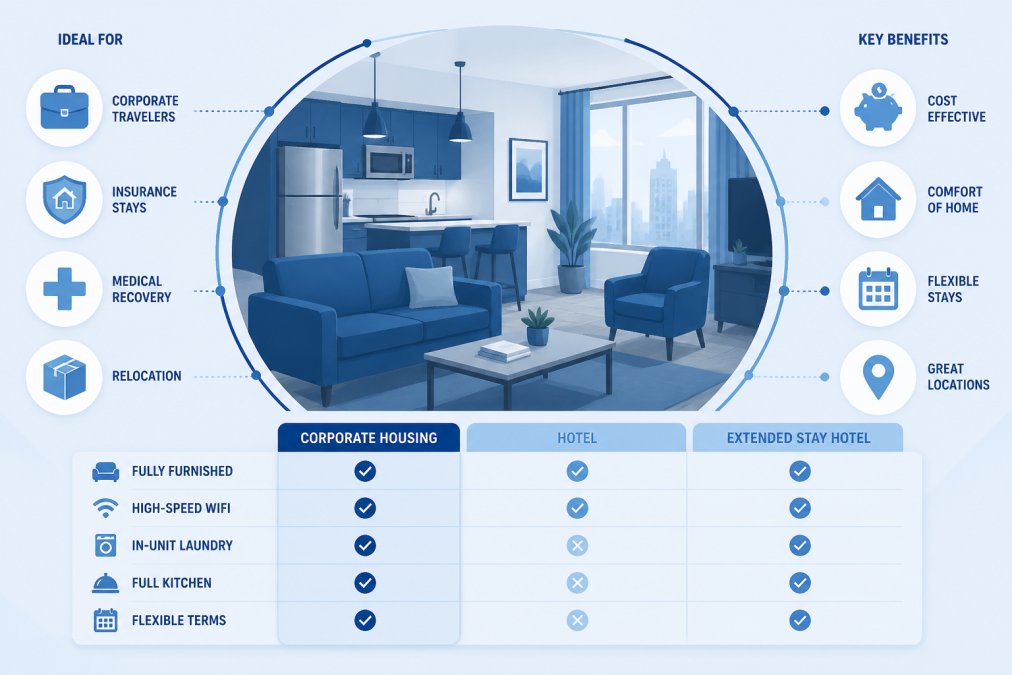
Your temporary housing needs differ from vacation rentals. You need fully furnished accommodations that are move-in ready, with utilities included or clearly separated, and flexible lease terms matching your displacement timeline.
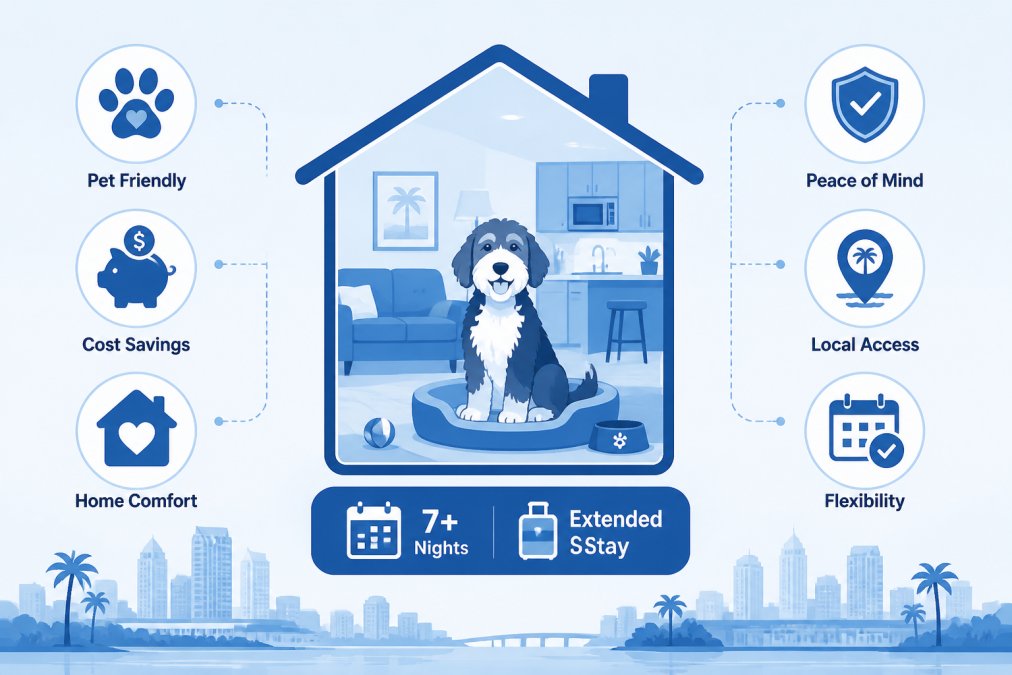
Furnished apartments are essential, you don't have time to buy furniture. Look for rentals including basic household items: beds with bedding, kitchen essentials, cookware, and dishes. Month-to-month leases without long-term commitments are critical since displacement duration varies. Pet-friendly accommodations matter if you have animals, as many options exclude pets or charge significant fees.
Tanblu specializes in temporary housing for insurance displacement. Our curated short-term rentals are fully furnished with included utilities and amenities, designed for people in transition. We offer month-to-month flexibility without long-term commitments, and our pet-friendly suites keep your entire family together during a stressful time.
Direct Billing vs. Reimbursement Models
Direct billing means your insurer pays the provider directly. You're not out of pocket for housing costs and it's simpler administratively. However, it requires your housing provider to participate and accept the insurer's payment terms.
Reimbursement means you pay out of pocket and submit receipts for reimbursement, typically 2-4 weeks after claim approval. This requires cash reserves but gives you complete control over where you stay.
Tanblu works with insurance companies on both direct billing and reimbursement arrangements, coordinating directly with your insurer to ensure your temporary housing meets approval requirements.
Policy Limits, Deductibles, and Reimbursement Amounts
Your actual reimbursement depends on your specific policy language, coverage limits, and deductible structure.
Understanding Your Daily Limits and Maximum Payouts
Most homeowners policies express loss of use coverage as a percentage of your dwelling coverage limit. If your home is insured for $400,000, your loss of use coverage might be 20%, providing $80,000 total. This equals about $219 per day, quickly consumed by temporary housing, meals, and utilities.
Some policies express loss of use as a daily limit, for example, "$200 per day." This is clearer but often more restrictive. The maximum payout is your total available coverage; once reached, your insurer stops reimbursing.

How Deductibles Affect Your Housing Claim
Your policy deductible applies to the damage claim, not directly to loss of use coverage. However, it affects your overall claim payout and timeline. If your deductible reduces repair reimbursement significantly, you face a longer repair timeline, extending temporary housing needs and increasing ALE expenses.
Some policies have separate deductibles for different perils. A hurricane might have a 5% deductible, while fire has a standard $1,000 deductible. Ask your adjuster explicitly how your deductible applies to your specific claim.
Reimbursement timelines vary. Once approved, some insurers reimburse within 7-10 business days; others take 2-4 weeks. Ask your adjuster for a specific timeline and follow up if payment doesn't arrive as promised.
Filing an insurance claim for temporary housing is manageable when you understand your coverage, document thoroughly, and communicate clearly with your adjuster. When you're ready to find temporary housing that meets your insurer's requirements while keeping your family comfortable, Tanblu offers fully furnished, pet-friendly accommodations with month-to-month flexibility. Our team understands insurance displacement claims and coordinates directly with adjusters to ensure your housing meets approval requirements. Browse and Book Now to secure your temporary housing while your home is being repaired.
Frequently Asked Questions
How long does insurance cover temporary housing?
Coverage duration depends on your policy and the time needed for repairs. Most homeowners insurance policies cover temporary housing for the period your dwelling is uninhabitable due to a covered peril, typically up to 12-24 months. Your policy limits and daily limits determine the maximum benefit. Contact your adjuster to confirm the coverage period for your specific claim.
What does Additional Living Expenses (ALE) coverage include?
ALE covers reasonable costs to maintain your normal living standards while displaced. This includes temporary housing (hotels, rentals, furnished apartments), meals, transportation, and utilities. ALE does not cover personal property replacement, entertainment, or luxury upgrades. Your policy specifies daily limits and what qualifies as reasonable expenses. Keep all receipts to support your claim.
Does homeowners insurance pay for temporary housing if my home is uninhabitable?
Yes, if your home becomes uninhabitable due to a covered peril (fire, theft, windstorm, etc.), your homeowners insurance typically covers temporary housing through Loss of Use or ALE coverage. The home must be damaged by an insured event and unsafe to occupy. Damage from excluded perils like floods or earthquakes requires separate coverage. Your adjuster will determine uninhabitability and approve housing benefits.
Are pet-friendly temporary housing options covered by insurance?
Standard homeowners and renters insurance covers reasonable temporary housing costs, which can include pet-friendly accommodations if necessary. However, policies may limit coverage to standard housing options. If your pets require special accommodations, document this need with your adjuster and provide quotes for pet-friendly rentals. Insurance covers reasonable costs, but luxury pet amenities may not be fully reimbursed.
Browse and Book Now!
This article was written using GrandRanker
Comments