
Furnished Rentals for Medical Patients: A 2026 Guide
Table of Contents
Why Furnished Rentals Matter for Medical Patients
Types of Medical Housing Solutions Available
Pet-Friendly Medical Recovery Housing Options
Month-to-Month Medical Stay Rentals: Flexibility Without Commitment
Amenities for Medical Recovery Housing That Support Healing
Insurance Coverage and Reimbursement Navigation
How to Find and Book Reliable Furnished Medical Housing
Conclusion
Last Updated: August 18, 2026
Why Furnished Rentals Matter for Medical Patients
When traveling for medical treatment, furnished rentals eliminate the stress of finding furniture, negotiating leases, or signing year-long contracts. They're designed for people in transition, recovering from procedures, undergoing extended treatment, or relocating for specialized care, who need a home-like environment without commitment.
Medical recovery requires stability, comfort, and timeline flexibility. A furnished rental with month-to-month flexibility adjusts if treatment takes longer than expected or concludes early. At Tanblu, we understand that medical patients need housing solutions working around their health needs. Our furnished rentals combine fully equipped apartments with the flexibility healing demands.
Practically, many insurance companies reimburse temporary housing costs during medical recovery. A furnished rental eliminates moving furniture, storing belongings, or maintaining a home while focused on recovery. You arrive to find dishes, linens, and everything ready to use, essential infrastructure for managing your health.
Pro Tip If your insurance covers temporary housing, get a quote from your provider before booking. Many reimburse furnished rentals at competitive rates, and documentation upfront prevents payment disputes later.
Types of Medical Housing Solutions Available
Medical housing comes in distinct formats suited to different recovery scenarios and family situations.
Furnished Studios and One-Bedroom Apartments work well for individual patients or couples undergoing outpatient treatment or early recovery stages. These units include a full kitchen, bathroom, and living area with contained space easier to manage while regaining strength.
Two and Three-Bedroom Furnished Units serve patients with family members staying nearby during recovery. Caregivers need separate sleeping space, and larger units provide storage for medical equipment and supplies. They're essential when recovery involves intensive family involvement, physical therapy, medication management, or round-the-clock support.
Accessible Furnished Rentals are critical for patients with mobility challenges. These include roll-in showers, grab bars, wider doorways, and accessible parking. If recovering from orthopedic surgery, spinal procedures, or mobility-affecting conditions, accessibility is foundational. Ask directly about ADA compliance and specific modifications before booking.

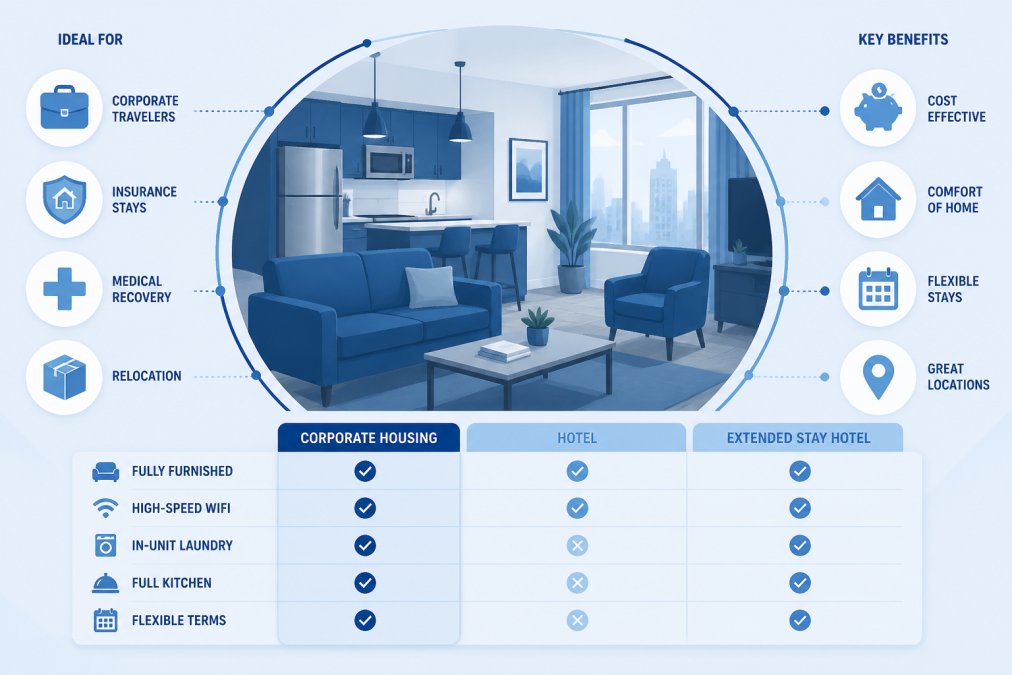
Corporate Housing Suites blur the line between hotel and apartment, designed for extended stays with housekeeping, front desk support, and sometimes fitness facilities. These work well if you want minimal responsibility during recovery.
Match housing type to your actual recovery needs, not just your initial estimate. Recovery timelines shift, and flexibility matters more than getting the perfect unit upfront.
Key Takeaway Match housing type to your actual recovery needs, not just your initial estimate. Recovery timelines shift, and flexibility matters more than getting the "perfect" unit upfront.
Pet-Friendly Medical Recovery Housing Options
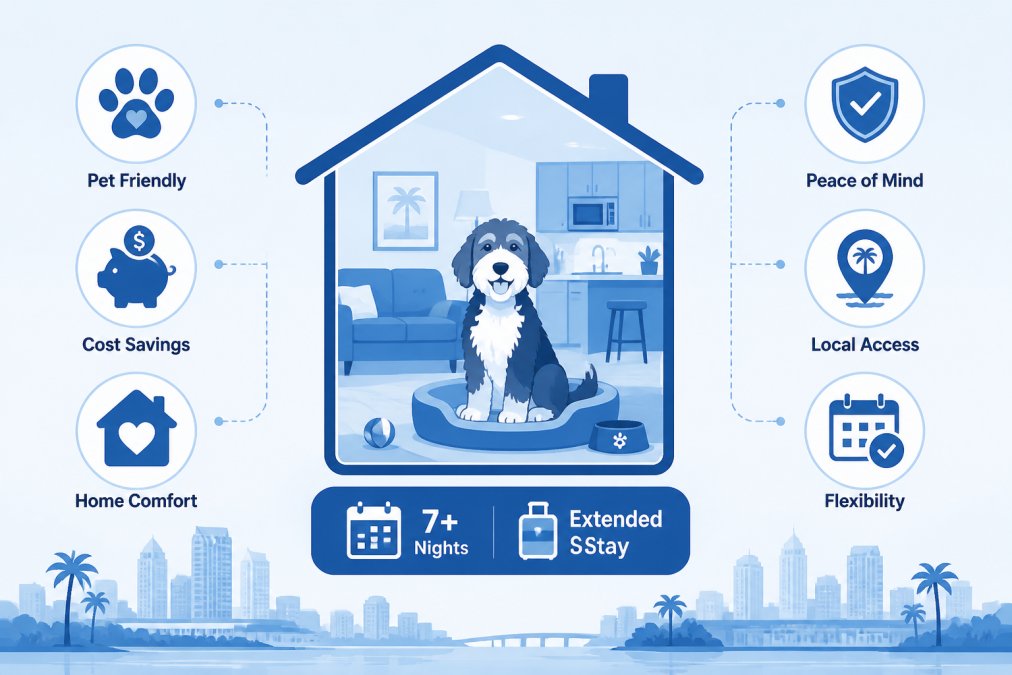
For many patients, their pet is therapeutic support during recovery. Yet finding pet-friendly medical recovery housing without excessive fees is difficult. Most traditional rentals either ban pets or charge steep monthly fees.
Pet-friendly furnished rentals recognize that your animal is part of your recovery ecosystem. Studies show companion animals lower cortisol levels and provide emotional grounding, benefits that matter when healing. When evaluating options, ask: Are pets included in the advertised price? What's the weight or breed limit? Is there outdoor space? Some properties charge $50-150 monthly per pet, costs that add up over a three-month stay and often aren't covered by insurance.
Tanblu's pet-friendly suites include your pet without surprise fees. That transparency matters when managing medical expenses and insurance coordination. The best pet-friendly medical housing also considers practical logistics: nearby parks for dog walking, veterinary clinics in the area, and landlords understanding that recovering patients might need flexibility for pet emergencies.
Month-to-Month Medical Stay Rentals: Flexibility Without Commitment
Month-to-month medical stay rentals let you adjust your timeline without penalty. Medical recovery is unpredictable, procedures might resolve faster than expected, or complications might extend treatment by weeks. A rigid lease locks you into paying for housing you no longer need.
Month-to-month flexibility means you pay only for time you actually need. If cleared to return home early, you leave without penalty. If treatment requires an extra month, you extend without renegotiating. That adaptability is fundamental to medical housing.
Some properties require 30-day notice to vacate; others allow shorter periods. Some charge premiums for month-to-month terms; others price them identically. Ask about specific terms, notice requirements, early exit policies, and whether extending is automatic or requires new approval.
Insurance companies often prefer month-to-month arrangements because they align with medical timelines. If your insurer covers the stay, they want documentation showing you're paying only for medically necessary housing. Month-to-month terms make that case easier to defend.
Watch Out Avoid properties charging steep penalties for early departure or requiring 60+ days' notice to leave. These terms contradict temporary medical housing's purpose. If you need to leave unexpectedly due to complications, you shouldn't face financial punishment.
Amenities for Medical Recovery Housing That Support Healing
The right amenities transform a rental from a place to sleep into an environment actively supporting recovery.
In-Unit Laundry matters for medical patients managing wound care, frequent clothing changes, or hygiene protocols. It's safer if mobility is limited or you're managing infection risk.
Full Kitchen Access helps if managing dietary restrictions related to your condition or taking medications with food. Furnished rentals with cookware and dishes mean you're not buying equipment you'll abandon.
Climate Control and Air Quality directly affect recovery. Proper heating and cooling prevent complications for certain conditions. Air filtration becomes critical for respiratory sensitivities or post-surgical concerns.
Accessible Parking and Entry eliminates stress when recovering. If using mobility aids, crutches, or a wheelchair, proximity and level entry are essential.
High-Speed Internet supports telehealth appointments, prescription refills, and family connection. Many medical facilities conduct follow-up consultations remotely.
Utilities Included simplifies budgeting and prevents surprise bills. You know your exact cost without worrying about unexpected charges.
24/7 Support or Emergency Contact means someone responds if something breaks. Medical patients shouldn't troubleshoot plumbing alone or wait days for maintenance.
Tanblu includes utilities, full kitchens, laundry, and responsive support in every unit, because recovery shouldn't require negotiating for basics.
Insurance Coverage and Reimbursement Navigation
Insurance reimbursement for temporary housing during medical recovery is possible but requires understanding your specific policy and navigating claims correctly. Many policies cover temporary lodging when medically necessary, though coverage varies by plan, provider, and circumstance.
Understand Your Policy First. Contact your insurance company directly and ask: Does your plan cover temporary housing? What's the daily or monthly cap? Do they reimburse furnished rentals or only hotels? What documentation do they require? Getting answers upfront prevents booking a unit only to discover it's not covered.
Get Everything in Writing. Request written confirmation of the benefit, limits, required documentation, and claims process. Email confirmations work. This protects you if disputes arise later.
Choose Rentals That Work With Insurance. Some properties are familiar with insurance claims and provide properly formatted invoices. Tanblu works directly with insurance companies on medical recovery stays, providing documentation that simplifies reimbursement.
Document Everything Related to Medical Necessity. Your insurer will want a physician's letter stating you need temporary housing during recovery, treatment documentation, and proof of rental dates. Keep records organized and submit with your claim.
Know What's Typically Covered. Most insurers cover base rental costs but not pet fees, parking, or amenity upgrades. Some reimburse at a percentage rather than 100%. Understanding these limits helps you budget for out-of-pocket costs.
Appeal Denials Promptly. If your claim is denied, request a detailed explanation and file an appeal with supporting documentation. Many initial denials are reversed on appeal with proper documentation.
Pro Tip Create a dedicated folder for all medical documentation, rental agreements, invoices, and insurance correspondence. When filing your claim, everything is organized and you won't miss deadlines.
How to Find and Book Reliable Furnished Medical Housing
Finding furnished rentals for medical patients requires a different approach than booking vacation rentals. You're looking for reliability, transparency, and properties understanding medical recovery needs.
Step 1: Assess Your Specific Needs. Clarify requirements before searching: How long do you need housing? How many bedrooms? Do you need accessibility features? Are you bringing pets? Is insurance covering part of the cost? Do you need proximity to a specific hospital? This clarity narrows your search.
Step 2: Verify Insurance Compatibility. Contact your insurance company and get written confirmation of reimbursement. Ask if they have preferred vendors or specific requirements. Some only reimburse properties meeting certain standards or having direct billing relationships.
Step 3: Search Specialized Medical Housing Platforms. General vacation rental sites often don't filter for medical recovery needs. Platforms specializing in medical housing and insurance-coordinated rentals are better starting points.
Step 4: Evaluate Properties Thoroughly. For each property, verify: Is it actually furnished with everything you need? Are utilities included? What's the cancellation policy? How responsive is management? Read reviews from other medical patients. Ask for photos of specific areas to confirm descriptions match reality.
Step 5: Confirm Accessibility and Medical Accommodations. Don't rely on property descriptions. Call and ask specific questions about grab bars, accessible showers, doorway widths, and parking configuration. Get detailed answers, not vague assurances.
Step 6: Request References. Properties experienced with medical recovery should provide references from previous patients. Hearing from someone who actually recovered there gives real insight into whether the property delivers.
Step 7: Book and Confirm Everything in Writing. Get a written agreement covering exact rental dates, total cost, what's included, cancellation policy, emergency contact procedures, and special accommodations. Email confirmations work if the property doesn't provide a formal lease.

Step 8: Arrive Early and Document the Unit. Take photos of the unit's condition, test appliances and utilities, and confirm everything matches the listing. Report issues immediately. This documentation protects you if disputes arise when you leave.
Tanblu specializes in this process for medical patients. We handle insurance coordination, provide fully furnished units with transparent pricing, and manage logistics so you focus on recovery. Browse and book now to see available furnished rentals for medical patients in your area.
Finding the right furnished rental for medical recovery removes a major stressor during an already demanding time. The right property, fully equipped, flexibly leased, and managed by people understanding medical needs, becomes part of your healing environment rather than an additional burden. When managing treatment and recovery, housing should be the one thing you don't worry about. That's what Tanblu delivers: reliable, medically-informed furnished rentals for medical patients with the flexibility and support you need. Get started today and move into a space designed for your recovery.
Frequently Asked Questions
How do I find short-term housing for medical recovery?
Start by identifying your specific needs: recovery timeline, accessibility requirements, pet status, and budget. Search platforms specializing in furnished rentals for medical patients, filter by lease length (month-to-month preferred for flexibility), and verify amenities match your recovery needs. Contact providers directly to confirm they work with your insurance company and can accommodate any medical equipment or caregiver needs. Always request photos and detailed amenity lists before booking.
Are furnished rentals for medical patients typically pet-friendly?
Many furnished rental providers now offer pet-friendly medical recovery housing, recognizing that pets provide emotional support during recovery. However, pet policies vary significantly, some include pets in standard pricing, while others charge additional fees. When searching, filter specifically for pet-friendly properties and confirm whether your pets are included in the advertised rate or if extra charges apply. Ask about any breed or size restrictions before committing to a booking.
How does insurance coverage work for temporary medical housing?
Some insurance policies cover temporary housing during medical recovery or displacement, but coverage varies by plan and circumstances. Contact your insurance provider before booking to confirm eligibility, approved housing types, and reimbursement limits. Provide your insurer with the rental agreement and itemized invoice. Some furnished rental providers work directly with insurers for streamlined reimbursement, while others require you to file claims yourself. Document all communications and receipts for your records.
What amenities should I look for in a medical recovery rental?
Prioritize accessibility features like ground-floor units, grab bars, and wheelchair-accessible bathrooms if needed. Look for fully stocked kitchens, in-unit laundry, and accessible parking. Ensure the rental includes bedding, kitchenware, and toiletries so you don't need to shop immediately after arrival. Climate control, quiet neighborhoods, and proximity to hospitals or medical centers support recovery. Some providers offer additional services like meal prep assistance or caregiver accommodations, ask what's available for your specific recovery needs.
Browse and Book Now!
This article was written using GrandRanker
Comments